
Reading List # 130
An entirely subjective list of things happening in Berlin

July 6 - August 23
Ausstellung PRÉSENT (Geschenk und Gegenwart) im TROPEZ
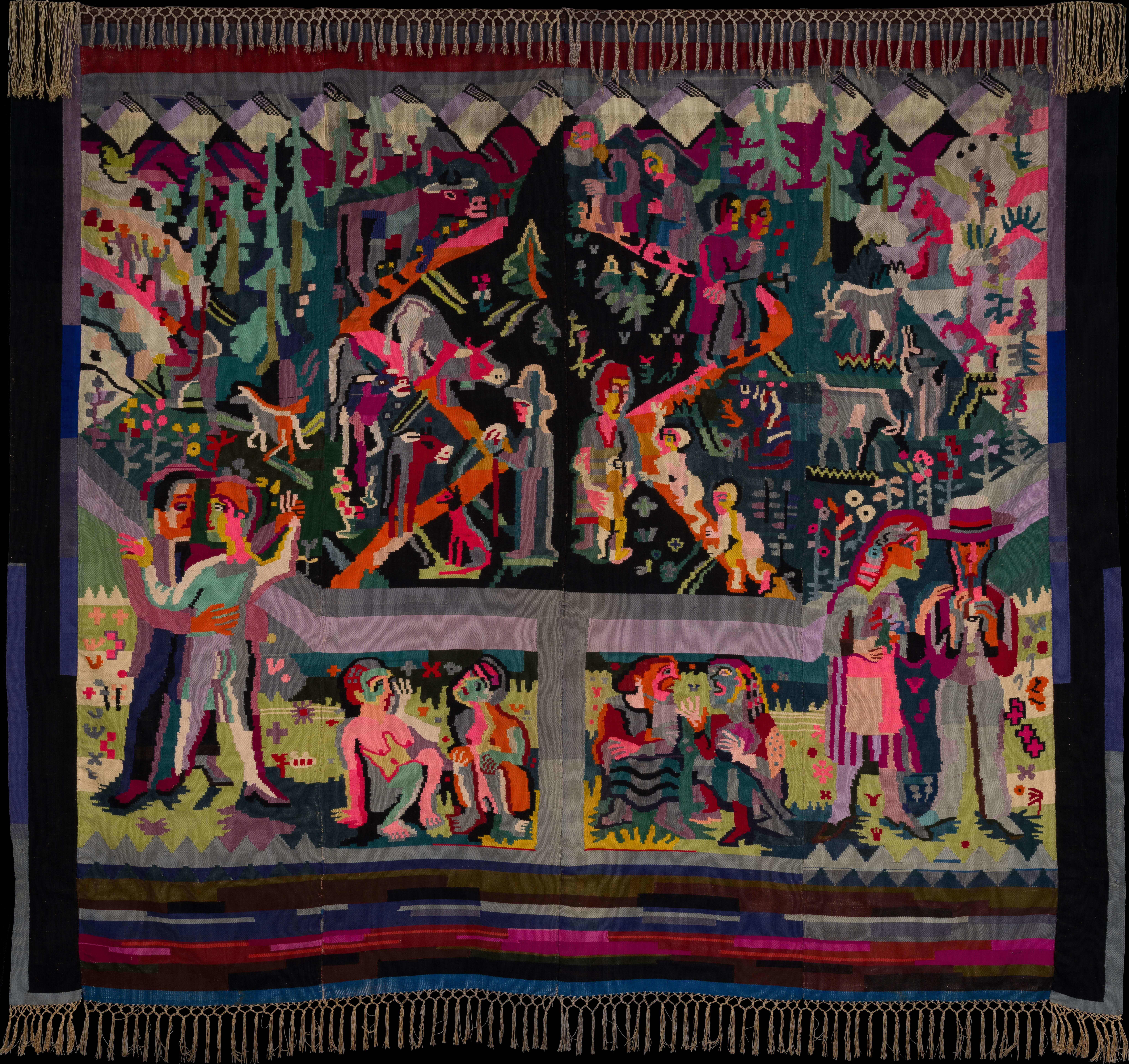
With the summer exhibition PRÉSENT (gift and present), TROPEZ celebrates the here and now. Ten artists of the post-90s generation present new artworks created especially for the outdoor pool and its audience. The sculptures and (video) installations are a tribute to the past nine summers: the artists quote their personal highlights from the history of TROPEZ.
Selin Acarbaş, François Briand, DaddyBears, Ileana Farabani, Anna-Lena Krause, Neda Naujokaitė, Thuy Tien Nguyen, Malin Kuht, Virginie Sistek and Nomin Zezegmaa address structural problems of our time — while at the same time devising creative counterproposals to reality.
As part of the performance series for PRÉSENT, the performing artists Olga Hohmann, Thuy Tien Nguyen, Belle Santos, and Alex Tatarsky shake up the lounging areas with their performances and celebrate the vibrant community that comes together at the outdoor swimming pool.
The curators Maria Buzhor, Creamcake, Moshtari Hilal, and Anna-Lena Panter / transmediale invite further young contemporary voices from literature (among them Elona Beqiraj, Meret Weber and Lara Rüter) and music theatre, electronic music, and technology to engage in exchange with the swimming pool audience.
(MULT)
all summer | Sommerbad Humboldthain, Wiesenstraße 1
July 8
Die Zukunft der Gesamtausgabe. Publizieren in Zeiten von „KI“
As new media and technologies continue to develop, so too do the practices of reading, publishing, and archiving. Together with Matthes & Seitz publisher Andreas Rötzer and media scholar Christoph Engemann, Wolfgang Hottner of the University of Bergen will discuss how the traditional format of the collected works is changing in the age of large language models. The discussion is prompted by a project currently being developed by Matthes & Seitz Berlin, which aims to make the collected works of Karl Marx and Sigmund Freud accessible through an AI chatbot.
How can the format of the collected works be reinterpreted today? What philological challenges does it present? What broader perspectives does it open up for the presentation of literary estates? And what critical questions need to be asked in this context?
(DE)
6 pm | Raum JK 32/202 (Rost- und Silberlaube) FU Berlin, Habelschwerdter Allee 45

July 8
Meisterwerke der NS-Satire und was sie uns lehren
Wolfgang M. Schmitt in conversation with Jan Drees and Maximilian Mengeringhaus.
Where political reality descends into grotesque cruelty and right-wing actors invoke fate and profundity, laughter becomes an act of resistance. Literary satire flourishes whenever times are dark. It is therefore no surprise that, during the National Socialist era, many writers turned to satire as a means of analysing the political situation. Some of these works are now largely forgotten, such as Otto M. Knab’s Kleinstadt unterm Hakenkreuz (1934) or even Walter Mehring’s Die Nacht des Tyrannen (1937). Others, however, continue to captivate readers, are of outstanding literary quality, and remain available in new editions.
The conversation will focus on Klaus Mann’s Mephisto. Roman einer Karriere (1936), Bertolt Brecht’s play Der aufhaltsame Aufstieg des Arturo Ui (1941), and the satirical work Dritte Walpurgisnacht (1933) by Karl Kraus. Looking not only to the past but also to the present, the discussion will ask: What can literary satire achieve in the face of the pervasive shift to the right? Is our laughter ultimately fatalistic—or revolutionary?
Part of Lesefestival antifaschistische Literatur.
(DE)
8 pm | Literaturforum im Brecht-Haus, Chausseestraße 125
July 9
»Aber versuchen wir einen anderen Anfang« Fragmente für eine antifaschistische Praxis
In this performative lecture, Fabian Saul and Tanasgol Sabbagh attempt to compose a present from texts of resistance. Its point of departure is Die Ästhetik des Widerstands by Peter Weiss, yet the material branches out across times, places, and voices. Rather than following a linear argument, the lecture is structured according to the logic of a musical score: voices enter, overlap, break off, and return. Quotations, poems, political texts, and fragments are not simply read but arranged, displaced, and heard against one another. Meaning emerges through rhythm, montage, and repetition.
From this compositional movement unfolds a dialogue about action: What does antifascist resistance mean today? How can historical material be transformed into a practice for the present without closing it off or neutralising it? What is the role—and the responsibility—of those who write? The envisioned “handbook” remains fragmentary: less a finished text than an open score.
Part of Lesefestival antifaschistische Literatur.
(DE)
8 pm | Literaturforum im Brecht-Haus, Chausseestraße 125